Black Sails and Red Skies

An examination of the fractured reality within the Action Force storyline

Introduction

If you read my previous blog entitled , Divide and Conquer, I discussed the practicality of the events as described within the Action Force mythos.

Tonight I want to continue that by delving into the upcoming Series that Valaverse plans to release called The Black.

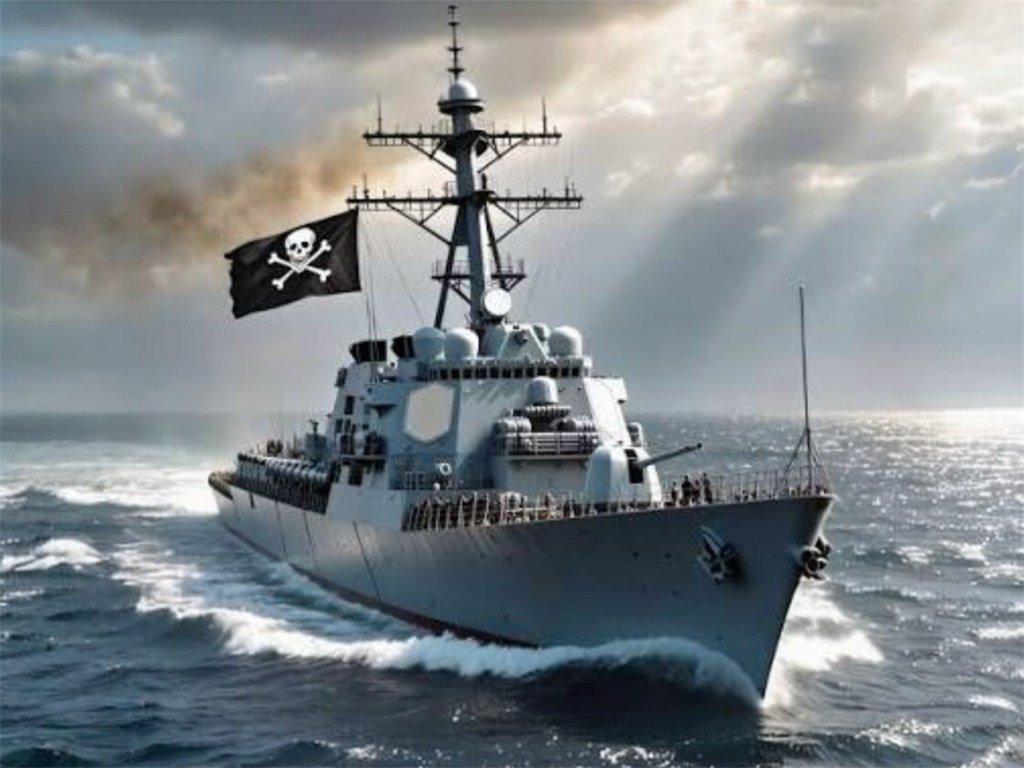
It’s a new series of figures from an all new faction that are comprised of former Naval Special Warfare operators. In short, they have taken over the U.S. Navy‘s fleet of warships, and now patrol our waters as modern day maritime mercenaries or pirates.

That’s all well and good for pretend, but it lacks the depth of what would really be occurring if the United States had dissolved to begin with.

Let’s be honest: this is a line of military action figures and comics marketed primarily for adult collectors, and within that fanbase are those who are and have served their country.

Anyone who has served looks at toys like Action Force, or G.I.Joe, and immediately begins critiquing the figures based on their appearance. They are looking for accuracy and realism, not what they played with in their childhood.

So it’s only fair to expect that same level of critique within a brand’s back story. What you’re looking for is consistency and continuity; a parallel to real world events with the appeal of action and adventure.

That’s why companies like Hasbro and Valaverse constantly release new comics and new figures; they are trying to sustain their brands through innovative and unique marketing strategies.

So what could that potentially look like with the new series from Valvaverse? Let’s find out.

The Black: What we know

Thus far, all we have been told is that The Black are a group of former Naval Special Operations operators who have somehow commandeered parts of or the entirety of the former United States Naval fleet of warships.

They use these ships to patrol the coastal waters of the former United States, offering safety and security, for a price. They also have their own agenda, that puts them at odds with both Action Force and New Colonia.

It sounds interesting, but from a writer’s perspective there are a lot of questions that immediately come to mind, with the first being the status of the U.S. Navy fleet itself.

Logic and logistics

To provide some context to this subject you have to understand that when you have an idea for a story, there is a tremendous amount of research that must be done.

For companies like Hasbro and Valaverse, they use technical consultants like myself who are experienced subject matter experts in a specific field like the military.

Talking to people like me gives the creative team a grounded reality check in how things work, which in turn allows them to flesh out their ideas, while making necessary adaptations or changes.

This is especially important in something like a military themed comic and toy line, particularly one being marketed primarily to adult collectors and fans.

Without that working knowledge of the real world model, the creative team will likely add elements that are inaccurate and unrealistic. G.I.Joe is one brand that has continued to do this time and time again in many areas.

Minute details may not stand out to younger fans, however adult collectors with experience and training will most likely notice these details, and be irked by them.

So when I think of a bunch of frogs commandeering the fleet, my mind immediately raises a flag of its own. This is particularly true when you consider how many personnel it takes to operate just one surface vessel.

Take for example, an Arleigh-Burke Class Destroyer. They are arguably the backbone of the United States Navy surface combatant fleet, with a total of seventy four ships in service as I write this.

Each of these guided missile destroyers has a crew complement of three hundred sailors! Compare that to roughly ten thousand sailors that comprise Naval Special Warfare Command.

Of that, roughly three thousand sailors make up the Seal teams. The remainder comprise SWCC (Special Warfare Combatant Crewmen), command, intelligence, and support personnel.

One carrier battle group comprises ten warships, manned by ten thousand sailors and marines, and there are eleven active carriers in the fleet. You do the math, and it becomes apparent that the frogs aren’t going to keep the entire fleet afloat.

Creating Compromise

Now that you know some facts and figures, it becomes apparent that The Black would be reliant upon former sailors to hop on board their recruitment program.

Greed speaks to the heart of many Americans, who have made material wealth and money their god. It would be reasonable to presume that The Black would seek to capitalize on the desire for money from those sailors still reeling from The Divide.

With no sense or purpose or direction, it would be natural for them to be attracted to the adventure of serving at sea as they once did for America, while being promised bounty beyond their imagination.

( A note here: Since we don’t know what type of currency is at play in the Action Force mythos, I would have to presume some form of cryptocurrency).

Just because the United States has dissolved, does not mean every country in the world has. On the contrary, there are nations who would be harmed financially, but who would recover in the long run.

Others however, would pounce on the opportunity to take advantage of the situation. With that, the seas are the primary trade lanes for commerce, which would make them a constant and lucrative source of income for would be pirates.

Companies looking to recover from financial loss would naturally seek out guaranteed security for their shipments going across insecure and uncertain waters.

Story-telling potential

It’s obvious that this new faction has the potential to expand the Action Force mythos by adding depth to an ever expanding story. What isn’t clear is how each of the existing factions will fit into this new narrative.

Obviously, all aspects of The Black cannot take place on the high seas. More than anything, I see their role being limited to coastal and littoral waters around the former United States.

From a writer’s perspective, you have to have an end planned from the beginning. In other words, there has to be an end goal established for each of these story lines to build up to.

That implies that with the creation of a new faction like The Black, that there exists an end goal for them, if in no other form than a sticky note on somebody’s desk.

For now, there are many more questions than answers, and I am anxious to see The Black make their first appearance in the pages of a comic.

Full Spectrum Warrior

Autism in the ranks of G.I. JOE

Introduction

In 2009 Hasbro released a brand new action figure as part of the G.I. Joe Rise of Cobra toy line. Agent Helix was a totally new character, and she would go on to appear in both the tie-in video game for the movie, as well as the comic series.

Everything about Helix is shrouded in secrecy, except for her skills. You always find her working alone, often on some covert mission for General Hawk.

It doesn’t matter what the mission profile, Helix is adept with both edged weapons, as well as firearms. She is an expert marksman, and martial artist. Though no one is invincible or unbeatable, Helix can take care of most problems on her own.

The other unique skill that makes her a savant is the fact that she can analyze an enemy, and instantly pick their strategy apart. It’s referred to as total organic battlefield awareness, and to date she’s the only known person with this ability.

All of these abilities and skills make Helix as deadly as she is beautiful, however she isn’t without her own Achilles heel. There’s a reason that she carries these gifts, and one for which she has endured ostracism and rejection.

Hidden wounds

Helix is neurodivergent, or in simplest medical terms, Autistic. It is the bane of her existence, and the weight that she struggles with when alone. She’s extremely capable on the battlefield, while remaining crippled by Autism in society.

Highly intelligent, socially awkward, with her own set of buttons you might unintentionally push. Before her time in G.I. Joe it crippled Helix in every area of her life. Now, she’s found a place that has allowed her to use Autism as an enabler.

Helix shows off her bandaid tattoo representing Autism

Defining Purpose

In my research for this little gem, I consulted with one of the leading experts on Autism in the Carolinas, who has extensive experience in both the U.S. and other nations. I have also consulted with prior service members who are on the spectrum. Due to their roles, I will not disclose their identity.

So what is Autism exactly? The Diagnostics and Studies Manual of Mental Disorders defines Autism as persistent deficits in social communication and interaction, with restricted, repetitive patterns of behavior, interests, or activities with symptoms present from early childhood causing significant impairment.

As it was explained to me by the above unnamed psychologist, Autism is not a mental illness, but rather a physical one. It isn’t treatable with medication, because at its core there’s nothing mentally wrong with the individual.

In simplest terms, Autism affects the way and speed at which your brain processes information. This may include an inability to perceive and interpret body language and cues, a lack of empathy, and most predominantly social awkwardness or anxiety to name a few things.

Autism affects a person’s senses, at different times and in different ways. Where one person may be sensitive to certain sounds, others may be sensitive to seeing certain things, or being touched in a certain way.

To what degree a person is affected varies from one individual to the next; there is no definable correlation between individuals. Only a pattern of certain sensory responses that are associated with being on the spectrum.

Nearly everyone on the spectrum is attracted to order, in almost every area of their life. Objects positioned in a certain direction, rooms and houses arranged a certain way, and even cleaned a certain way.

You may find neurodivergents who don’t like people touching them or their stuff, and collecting things that others would find odd. Construction paper, paper clips, and pens are a few things that come to mind.

The defining negative aspect of Autism are meltdowns. Often misinterpreted as angry outbursts or temper tantrums, meltdowns are anything but the previously named culprits of society.

A meltdown occurs when too much information overwhelms the senses, and subsequently the brain is incapable of processing that information. The meltdown is an uncontrollable natural response that is triggered by the brain’s inability to cope with the information flooding the neural pathways.

An example might be an autistic individual is afraid of someone confronting them, and they may throw their hands up and yell not because they are angry, but because they afraid, and want that individual to stop what they are doing.

They cannot legitimately process what is happening, and from their brain the conversation may be perceived as a verbal attack on their character or credibility. If so, the resulting meltdown would only serve to solidify misconceptions to the inexperienced and untrained.

To further expound on this, there are individuals like Helix who are high functioning, meaning they can communicate, and live a mostly normal existence. Put another way, there is nothing wrong with them.

On the opposite end of the spectrum are those who are crippled by their brain’s inability to process information, and who require constant attention and care. They cannot control things like speech, with many being nonverbal.

In between are many combinations and variations on these two extremes. You may have an individual who is high functioning, and yet who has severe sensory overload.

For the most part, high functioning individuals were formerly diagnosed with what is referred to as Asperger’s syndrome, while more severe cases were diagnosed as full on Autism.

In recent years however, both have been integrated into what is now called ASD, or Autism Spectrum Disorder. The reason for this change is a simple one; because every single person is different, and so is their specific diagnosis.

Most adults who are high functioning would tell you they are not anti-social; they just abhor drama and having to put up with other people’s crap. They despise things like gossip and slander.

They are not in some cute contest to win a person’s favor; they simply want to live their life and be left alone. Over time many are able to compensate by learning their triggers and focusing on their strengths.

Others struggle to some degree or another. Those who endure constant abuse, bullying, and harassment often find themselves living in constant fear, crippled by the negative opinions and words of others.

Being mistreated at any age is interpreted as a sign of isolation and rejection, which further compounds and affects their ability to be productive and successful in life.

Scratching that itch

One of the most interesting things about Autism is the fact that nearly all high functioning individuals on the spectrum are extremely intelligent, with some having genius level IQs.

Though many may be crippled by specific areas, they are gifted in others. For whatever reason, Autistic individuals are often extremely analytical. They pick up on details that neurotypical individuals would overlook.

Some like Helix find that they are natural leaders, with an ability to flourish in austere environments. They have the ability to take what once overwhelmed their senses, and turn it into a tool to excel in specific areas.

One such area is pertinent to this blog, and that is the military. Though no official reports were available, there are many who have obtained waivers to enlist, while others simply don’t disclose it during their application process.

The structured environment of military life may appeal to some on the spectrum, providing an unintentional method of assistance to success through daily repetition and set routines.

Others however who have enlisted find this aspect of the military the least desirable. They loathe the closeness with individuals they do not like, and remain individualistic in their approach and mindset.

Many of these folks have ended up in the special operations community. The desire and need for purpose drive them to choose the most difficult paths, forging their character and personality to a razors edge.

Some go further still, and become designated marksmen and snipers. I have been told that some of the best long gunners in the special operations community were people found to be Autistic.

Their innate ability to focus on minor details such as those in Kim’s games, along with increased awareness and maturity have led many down this unique path.

During selection, unit psychologists are present to assist cadre with assessing the candidates ability to operate alone as well as in a team environment. They are constantly being assessed on their character, personality, and individual traits.

Specifically, they are looking for highly intelligent and mature individuals with passive aggressive personalities. That immediately makes an autistic candidate potentially attractive, because if they can harness the meltdowns, they can turn it to their advantage.

Whereas being on the spectrum was an obstacle in civilian life, it becomes the doorway to destiny in the military. Helix learned this lesson after General Hawk recruited her to G.I.Joe

Within a year she went from the day to day personal struggles, to being the tip of the spear in a special missions unit. To date, she is the only known member of G.I. Joe with no prior service.

The road ahead

The story of Helix should offer hope and insight into what is possible. The struggle as they say is real. No one will ever know how crippling Autism can be without experiencing it for themselves.

In that lies the potential for success, given the right opportunity. A door cannot be walked through without it first being presented as an option. As for Helix, let’s see where G.I. Joe takes her next..

Divide and Conquer

An in-depth discussion of the Action Force narrative

Introduction

I am a huge fan of the Action Force comics and figures produced by Valaverse, so naturally I am fascinated by the story behind it.

Bobby Vala has created a very interesting mythos for these characters, that in many ways has an eerily familiar parallel to modern day events.

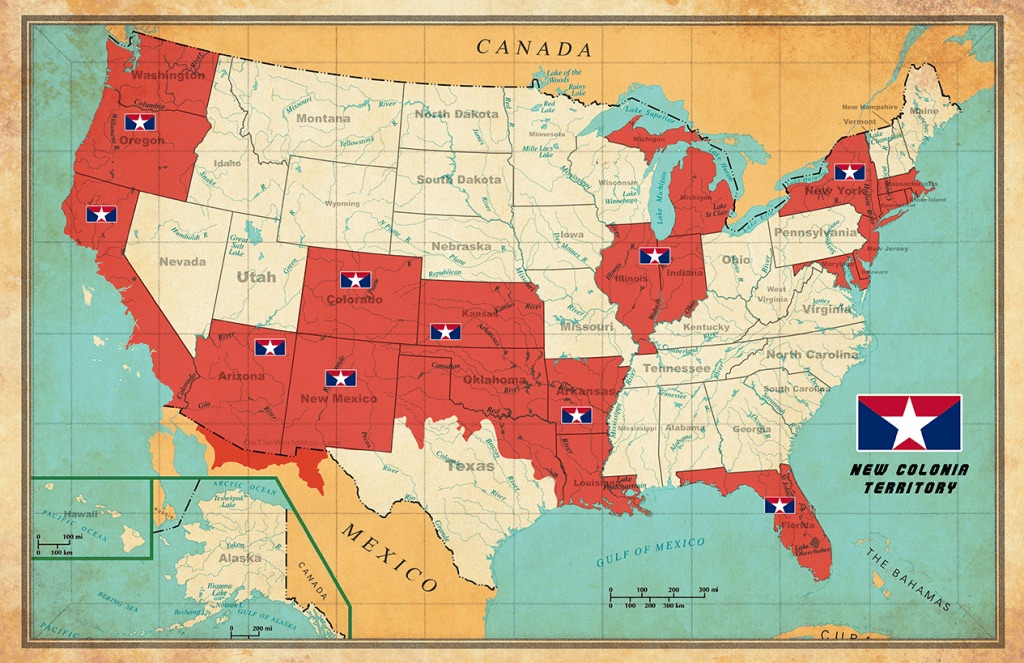
The catalyst for the narrative is an event called “the Divide”, in which the United States of America is dissolved, with each state becoming its own sovereign republic.

In spite of reading the comics from the series, I find myself left with more questions than answers. How exactly did the United States cease to be? What caused it? What happens to the U.S. military, its assets, and infrastructure?

These are just a few of the immediate questions that one would be faced with in such a crisis of this magnitude. So, in this post I am endeavoring to fill in some of the unanswered aspects of the Action Force narrative, that may help casual readers as well as hard core fans to better understand the mythos.

I will preface this by stating that I am not endorsed nor have I received permission from Valaverse to write this post; I’m simply a fan having fun by delving into this exciting universe from my own experience and research.

Catalyst for crisis

In the Action Force mythos, a series of events leads to the dissolution of the United States of America. In its place are fifty independent states. Sovereign and fractured by the Divide, they now stand alone to pick up the pieces. The first question is, could this really occur, and if so, how?

In theory yes, the United States could be dissolved as a Republic, but it would not occur overnight. One possibility would be a series of catastrophic events that occur in succession.

An example would look like this: Economic collapse occurs, followed by riots, violence, natural disasters (like the earthquake of 2028 in the Action Force mythos), and even domestic conflict.

Whatever the events that begin the chain reaction, they must all lead to the same outcome: multiple states become fed up with the state of affairs in the federal government.

From there, two-thirds of the state legislatures could then call for a constitutional convention under Article V.

The only way that the republic could be dissolved then, is that two-thirds vote determines that the dissolution of the union is in the best interests of the American people.

At this point an amendment to dissolve the Union is drafted, and sent to each state for ratification under Article V. If three fourths majority sign it, then it would become accepted as a legally binding document and become law.

At that point on that day, the United States of America would cease to exist as a unified republic of fifty states. This would then require and begin the process of disposition in each state of federal assets and liabilities.

This would include any and all United States military assets and infrastructure within each state. The process would be daunting, as each state would most likely activate their National Guard and use it as a temporary command to carry out this process in a controlled and safe manner.

At the top of this list would be the United States nuclear arsenal. Based on International law, The U.S. could theoretically request international assistance from NATO partners prior to the dissolution, in order to provide time for these weapons to be secured, dismantled, and taken into the custody of allied partners.

They may even assign NATO forces to oversee this at current decommissioning sites stateside. This process would take months, if not years to complete, and would be the most high-risk aspect of the dissolution of the union.

The second and third tiers of responsibility for the states would be Air and naval assets, respectively. By all accounts, the bulk of these would cease to be utilized due to the fact that their operation requires tens of thousands of certified personnel across the country to do so.

Of greatest concern would be the security risk they pose to foreign enemies seeking to take advantage of the fallen union. Internally, there would be an unprecedented amount of chaos and lawlessness in most states.

Disease, hunger, and violent crime would skyrocket. There would food shortages, power outages, uncontrollable reactions from the worst in society. These events would most likely result in localized armed conflicts of themselves.

Local first responders and the national guard would be outnumbered and overwhlemed by the sheer number of incidents. Medical emergencies would overwhelm local emergency rooms, and the death toll would rise.

The world would watch America tear itself apart, while it too felt the effects across the oceans. Without the commanding presence of the United States and its leadership to guide the free world, other nations would also suffer.

There would be untold economic repercussions, while the wild cards like China and Russia would seize the moment for their own agendas.

Wars would ensue that would require the entire free world to band together in a way that they never thought possible. It would be a trying time for everyone.

In the midst of the chaos, some states in the union may seek safety in numbers and propose regional alliances with each other. State governors would undoubtedly seek to maintain stable economic ties, while ensuring continuity of commerce across borders.

Laws would be amended, or at least temporarily so, in order to reflect the state of the fallen Republic.While there may be a conservative effort to restore the Republic, there would most likely be resistance from liberal states and their leaders.

They may enjoy their newfound independence, and begin making laws which benefit the ultra-elite, rather than the common good of everyday citizens. It is from these crevices in society that the greatest threat may emerge.

Leaders from every sector of society banding together in what would formerly be criminal enterprise, sowing discord within, while forming allegiances with external enemies of the former United States of America.

Evil people who would do anything to capitalize on open access to the land of the free, with unrestrained ambition driving their every move. The only way to counter such a threat would be a clandestine and unified military organization on land, derived from former military personnel who could be vetted.

They would have to have a single objective, with unequivocal support. Their missions would be clandestine by necessity and would require unparallel cooperation across state lines.

It would be a daunting task, but not an impossible one. The key to success would be unity and the use of surgical operations aimed at exploiting intelligence.

Months if not years would be required, but there would come a point in the near future where if enough states unified under a single banner, they could reclaim what was lost.

This then, is an extremely hypothetical yet realistic scenario for what we have been made privy to in the Action Force mythos.

Through the use of multiple factions playing different angles, we are being given a glimpse into corruption fully conceived in this nation.

The answer then, is a response as unconventional and unanticipated as the evil that demands we respond to it.

Conclusion

What we see in the Action Force mythos is if anything, an eerie parallel to current global events. This isn’t our favorite action cartoon of yesteryear; it is rather a wake-up call to the reality around us.

If anything, playing with these action figures or reading the comics should motivate us to live lives that are above reproach, abiding by an ethical, legal, and moral code no matter the conditions around us.

It’s time for Action!

Incursion: An inside look into a Rebel SpecForces mission.

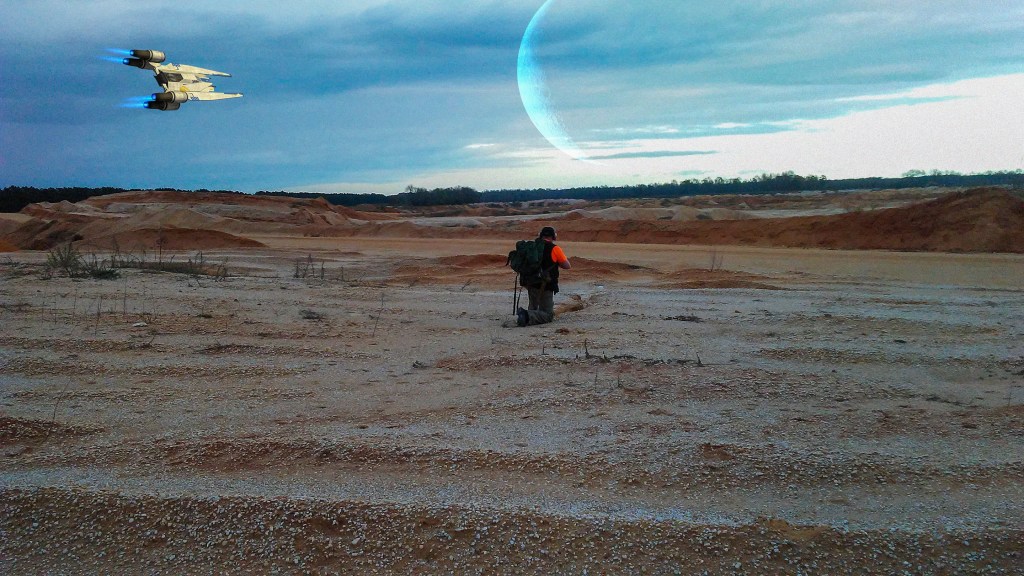
The extreme height of the forest canopy provided cover from above, while dense undergrowth provided cover on the ground. In fact, the team had been using the extensive micro terrain to their advantage, moving in its shadows all the way to their objective.

They had been dropped off dirtside seventy-two hours prior, being inserted by a sixty at night during a rainstorm.

The mission planners had timed the insertion down to the second, calculating phases of the moons, along with predicted weather patterns to cover their infil.

They used the intense lightning as cover, knowing that it would wreak havoc on the Imperial outposts sensor array.

The pilots in turn jumped in system over the southern pole, and flew below sensor range all the way into the LZ.

They had to mount external drop tanks to the ventral engine pylons just to get the team in and hoped they had enough fuel to make it back to the RV with the fleet.

Two systems away was a Mon Cal cruiser on alert ten, with the QRF and air support ready to go if needed.

Three days of crawling and humping through the forest, and the four-man SpecForces team was nearing their objective.

They had been sent in to take out a Weequay communications specialist who had defected to the Empire. General Madine had given the green light to Captain Maven Therrell, and he picked three of the best shooters in the unit to go along for the ride.

Now, they were nearing the outer perimeter of the Imperial outpost. The facility itself was built into the side of a ridge, with a large plateau to the rear that had been converted into an elevated landing platform.

The armored structure had several turbolaser batteries scattered around the perimeter for air defense, along with ground to air missile batteries.

Outside of the turbolaster batteries was a twenty meter tall ferrocrete armored wall that encapsulated the entire facility.

The team paused, and took a knee behind a fallen tree on the edge of the forest. Captain Therrell signaled for the team to hold, while he moved up to conduct recce.

He used a small pair of macrobinoculars to observe and record the base. He took great care to inspect the guard towers atop the wall, noting that they were spaced every three hundred meters.

He could see Imperial army officers augmented by Stormtrooper patrols, as well as heavy blaster cannons mounted on pintels in each tower.

He also noted the small comlink antennas atop each tower, that would serve as repeater relays for the security element.

Further back at the main complex, he could make out larger aerial antenna arrays pointed up at the sky.

“Blast this” He thought to himself, shaking his head. Captain Therrell moved back to the team and briefed them on what he had observed.

They all knew that the odds were against them before they ever left the briefing for this op, and they volunteered anyway.

“Alright ” Captain Therrell whispered, “switch to our alternate FFP” he stated, referring to their final firing point.

The team slowly moved away from the edge of the forest and selected a route that would allow them to handrail the perimeter of the base from five hundred meters away.

It took them all evening and into the night to make their way around to the back side of the plateau. There, they found a ridge line with a line of sight to the landing pad.

Once they set-up shop, the combat controller extended the large antennas from his backpack mounted ground to air comlink.

He began coordinating with the Alliance Prowler in orbit, setting up the air package for the strike. The other three members of the team set up their Blastech A392R designated marksmen rifles.

Careful not to break noise discipline, they deliberately extended the bipods on the rifles, and moved into prone positions side by side.

They waited and watched all night, until zero three forty five hours when the platform lights switched on at the landing pad.

Then, high up above the team could hear a high pitched whine as a Lambda-Class shuttle dropped out of the sky. The Imperial transport quickly flared, then dropped down onto the pad.

“Stand by” Captain Therrell whispered, “I have control.” The team watched through their rifle scopes as the ramp lowered, and an Imperial security team rushed down the boarding ramp.

They formed a semi-circle at the base of the ramp and then signaled someone the team couldn’t see. Captain Therrell watched as a shadow preceded a short Weequay in black traditional garb, slowly making his way down the ramp.

“Execute, Execute, Execute” Captain Therrell called out. In unison the three SpecForces snipers took the slack out of their triggers, their rifles recoiling from the blast of each round.

Captain Therrell watched as his round raced across the five hundred meters to the landing platform, and split the Weequay’s chest apart with hot plasma. The other rounds hit him as well, sealing the deal.

The Imps immediately reacted, but it was too late. The Alliance shooters were already picking off targets on the landing platform, buying time for the combat controller to their rear.

Suddenly a series of red lances raced down through the cloud bank, striking the Imperial base’ communications and targeting arrays.

The missile batteries came to life, but they were playing catch up. Rebel X-Wings raced by overhead, pummeling each one with micro proton torpedoes and concussion missiles.

As the X-Wings peeled away, the combat controller continued to direct fire onto the base from the orbiting prowler.

The stealth corvette raked the Imperial base with salvo after salvo from its turbo laser batteries, leveling the facility while detonating its power generators.

The SpecForces team remained in position, conducting damage assessment, before being ordered to exfil the area.

As quietly as they had arrived, they stepped away one at a time, back into the forest. As the sun began to rise, the team made their LZ and boarded the sixty for the ride out.

Captain Therrell looked out of the armored viewport, watching the Empire’s science experiment burn to cinders in the morning sun.

ISB: Imperial control through darkness and deception.

INTRO

The Galactic Empire is nearly as vast as the galaxy that it controls, but unlike the republic which it has replaced, it governs through the will of the Emperor, which is carried out through Imperial policy and subjugation. This is best observed through the overt presence of the Imperial military, who occupy and control every world which finds itself grafted into the Galactic Empire.

The Emperor makes use of Moffs and political attaches, who are responsible for bringing planets into alignment with Imperial doctrine and oversight. This is supported by military power projection, through the twenty-five thousand Star Destroyers that are the heart of the Imperial Navy. Their presence in any star system signals the end of democracy and freedom for any world on which they are assigned.

Dirtside, the politicians and their diplomatic efforts and ideals are reinforced by the Army, who in turn are supported by legions of armor-clad Stormtroopers. These highly skilled and trained shock troops are loyal to the emperor and his authority, and their presence is as much a psychological tool as a military one.

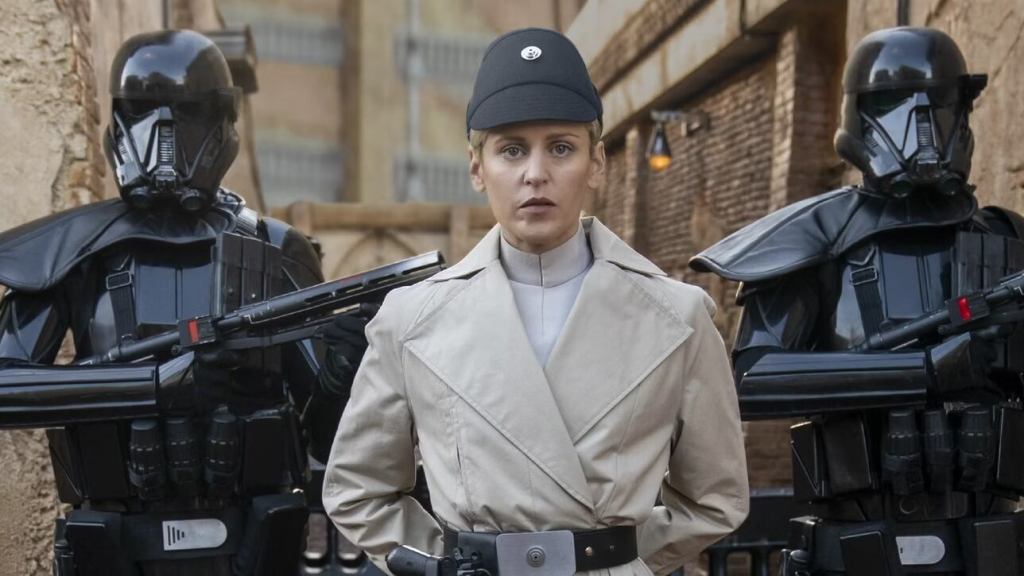
There is, however, another facet to Imperial control that goes unseen to the untrained eye, and one that has become a thorn in the flesh for the Rebel Alliance and its sympathizers. That pain is induced by the ISB, or Imperial Security Bureau. The ISB is just one of the many organizations that are a part of the Commission for the Preservation of the New Order (COMPNOR).

Unlike its counterpart division of Imperial Intelligence, the ISB is not concerned with strategic military intelligence, but rather with state security. It was created as a means to an end; a way to ensure loyalty to the Emperor on every level, and a means to exact punishment for those who were not.

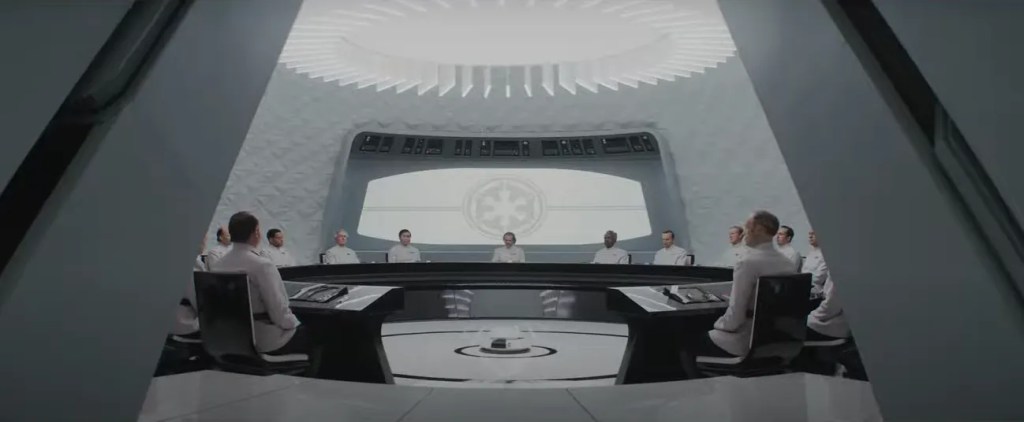
The ISB is a larger organization than it’s military rival, and its headquarters is located in a large nondescript building in the federal district of Coruscant. The ISB is governed by a body of senior officers known as the High Command, who report directly to the Emporer himself. They ensure that Imperial doctrine, ideology, and policy are promoted throughout the Empire, and that Imperial rule is secure.

RECRUITMENT

The ISB selects its agents from the ranks of the Imperial Academy itself, and upon vetting their recruits undergo specialized training at the ISB Academy on Coruscant. Upon successful completion of training, newly accepted agents enter service into one of the many divisions of the organization, such as counter-surveillance, Interrogation, or reeducation.

OPERATIONS

Agents assigned to Intelligence begin their careers in the ISB Operations Center, aggregating daily intelligence reports from around the galaxy, and building briefing packets for senior officials and officers. Upon promotion, many of these agents select further training to become field agents for the ISB.

In the field, ranking ISB agents are granted authority and great leeway in their operations, to the degree that they can when needed assume command of ground forces or entire starships, by relieving senior officers who outranked them. This by design breeds animosity between Imperial military officers and the ISB hierarchy, and their complaints often fall upon deaf ears.

INTERNAL AFFAIRS

Agents with Internal Affairs are tasked with counter-intelligence investigations for the ISB are deployed at random throughout the army and fleet, ensuring adherence to Imperial doctrine and order. They investigate any claims of military personnel who are insubordinate, or who question Imperial doctrine or orders. The presence of the ISB by design simultaneously commands respect, as well as creates a culture of fear in the Imperial military, which reinforces loyalty to the Empire under threat of punishment.

LOYALTY OFFICERS

The mission of the ISB is not confined however to counterintelligence of the Imperial military, but into every facet of Imperial society as well. Imperial propaganda is created by the ISB to serve the purposes of the Emperor, and they are tasked with ensuring its adherence on Imperial worlds.

SECURITY DIVISION

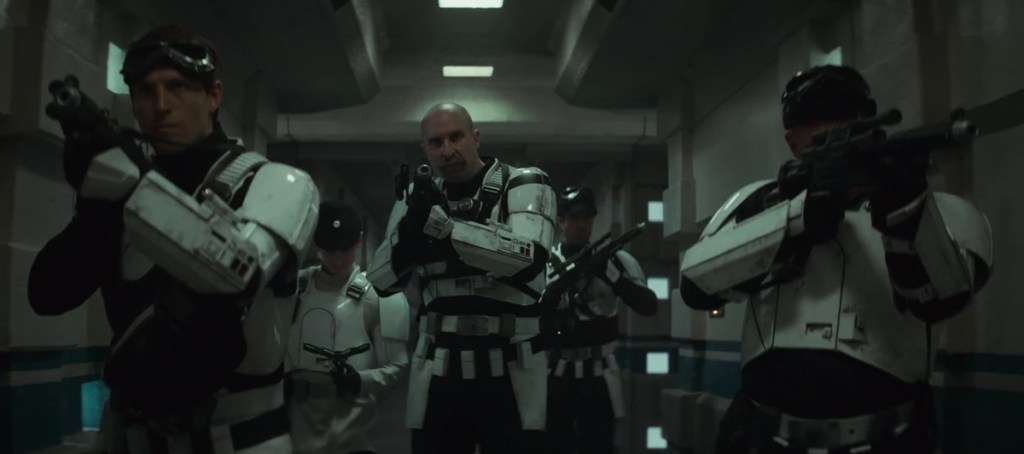
ISB Agents who are selected for the Security Division receive advanced training in small arms and small team tactics. They are then assigned to one of the many ISB tactical teams that deploy with senior field officers on various assignments. Often the tactical teams are utilized to capture wanted fugitives of the Empire, and they often coordinate their operations with larger military units who provide support for their operations.

ISB Tactical Agents conduct a Rolling T formation down a corridor

ADVANCED WEAPONS RESEARCH

The ISB was also one of two agencies tasked with controlling the Imperial Advanced Weapons Research Division. While project development fell to the Imperial Intelligence, security of those projects was assigned to the ISB. As such, soldiers from the Advanced Weapons Research, or AWR, were often deployed with ISB agents on special assignments.

A senior ISB agent in the field, supported by soldiers from the Advanced Weapons Research program

COUNTER-INSURGENCY

Perhaps the greatest assignment of the ISB would become its counter-insurgency operations against the Alliance to Restore the Republic. In the beginning, the Rebel Alliance was not a well-organized militia, but rather an ideal born through localized resistance to Imperial rule. Imperial forces attempted to subjugate this resistance, with the opposite effect.

Throughout the galaxy, bands of resistance formed on far flung planets, which in turn influenced the local populace, and governments. Word of this rebellion began to reach official news agencies like the Galactic News Network, which could not be tolerated. Once the ISB learned of these uprisings, their agents, along with appropriate military support, would deploy to eradicate it’s presence, and restore Imperial rule.

Over time, the ISB would learn that their efforts had in fact the opposite effect on the growing resistance movement. Over the years localized cells of resistance spread word by freighter pilots, passengers, and even clandestine communications networks that they had developed. These once primitive insurgents became a force to be reckoned with, and one that the Emperor wanted vanquished.

This led the ISB to deploy counter-intelligence agents into the field, who were often assigned with agents from Imperial Intelligence. Their objective was to infiltrate locations utilized by the rebels, in the hopes of gaining actionable intelligence. When they were successful, they would utilize military forces to conduct highly sophisticated capture or kill missions on individual members of the Alliance.

For larger operations, they would utilize entire fleets of Star Destroyers in an effort to destroy rebel fighters and ships. Doing so would greatly diminish the capabilities of the rebel forces, while instilling a sense of defeat and fear within its ranks. For the ISB, their efforts were as much a psychological campaign, as they were about state security.

They would conduct false flag operations such as on Ghorman, and blame localized rebel operatives for the deaths of Imperial citizens. They planted evidence and false intelligence, leading to the arrest of rebel sympathizers and supporters across the galaxy. Entire companies such as Blastech Industries and the Incom corporation were seized by the ISB, and placed under Imperial Military oversight.

CONCLUSION

The ISB is perhaps the most feared entity within the Imperial hierarchy, and for good reason. They operate with near Impunity, having the support of the Emperor himself. The ISB and its members serve as the hand that does his bidding and are responsible for ensuring that the integrity and stability of the Empire continue unimpeded.

They are by far one of the more fascinating aspects of the Empire and serve as the basis for various aspects of Star Wars gaming and role playing, such as larping and airsoft.

Dead or Alive: Bounty Hunters and Mercenaries in the Age of the Empire

In the ensuing chaos of the fall of the Republic, the Galactic Empire finds itself facing a very disturbing reality, resistance. In nearly every sector throughout the galaxy, there are bands of resistance to the Empire’s rule.

In less than two decades, those independent resistance cells begin to coalesce into a far greater thorn in the Emperor’s flesh, an Alliance to restore the Republic. The thought of such a vain attempt may have seemed laughable at first, but the Empire would soon learn the cost of their miscalculation.

All across the galaxy the Rebel Alliance and it’s allies engage in hit and run tactics against Imperial forces. On the ground they strike armories, supply depots, listening posts, and relay stations. In the skies above they strike at the heart of the Imperial fleet; it’s shipyards, scoring critical victories that cripple their foes.

The Empower did not take any of this lightly and ordered the Imperial Security Bureau (ISB) to use whatever means where necessary to end the rebel insurgency. ISB tacticians studied the rebel attacks for weaknesses and decided to engage in their own asymmetric warfare campaign. They began planting agents on planets in the outer rim, gathering firsthand intelligence of rebel activity, but they didn’t stop there.

The ISB turned to the shadows and began hiring bounty hunters and mercenaries to do their bidding. They kept their contracts off of official Imperial records, by creating a separate, hidden file in their database. These contracts would be known only to the ISB and privately funded from their own sources. They would conceal these transactions as legitimate business payments in order to provide immutability to the Empire.

The ISB would provide support in the form of Intelligence, while the actual work would be carried out by the bounty hunters or mercenaries themselves. Often these contracts would focus on capturing high ranking members of the Rebel Alliance, in order for them to be interrogated by the ISB itself. For other High Value Targets like Rebel pilots, they wanted them eliminated to send a message back to their leaders.

Once this operation was underway, whispers began to circulate in the Outer Rim. Alliance informants, soldiers, and spies turned up missing or dead. It didn’t take long for Alliance Intelligence to ascertain what was going on. Their informants engaged in a deadly game of counterintelligence against Imperial spies, passing on what they had learned.

A Trandoshan bounty hunter tracks a Rebel operative on Cloud City

In the process, Rebel Intelligence would begin building target packets on the Empire’s hired hands. It became a real-life version of Dejarik, only the moves weren’t played out on a holoboard, and there was no respawn, and no second chances. Every step taken must be calculated and planned.

The Alliance knew that they needed a way out of any location before they ever went in, or else they risked being captured or killed. The bounty hunters and mercenaries themselves may have dared venture into shady business dealings with the Empire, but they would soon find the rebels to be unwilling participants in their quest for fortune and fame. Their easy ticket to retirement wouldn’t be punched as quickly as they thought.

Often their quarry would lead them on high-speed pursuits across towns and into the unexplored wilderness, while others demanded pursuit into the skies. These seedy characters began racking up the credits, as well as a reputation amongst their peers. It became a sick game that only the most ruthless enjoyed.

Their time of pleasure, however would soon find them under the watchful gaze of those more skilled in hunting and killing. The Alliance would not allow the Empire to go unrewarded. They would watch and wait, and set their own timetable for reciprocity. When Imperial spies and mercenaries began turning up dead on worlds like Bothawui and Tatoonie, the Bounty Hunters Guild took notice.

Rebel Alliance SpecForces were sending a clear message: back off or die; it’s just that simple. To make a point, they would leave holos of the Bounty Hunter’s families, their homes, their ships in a hanger. Now the tables would be turned, and they would soon realize that their dark deeds had attracted a cost that they were not willing to pay.

Their entire business and lives were datamined by the best slicers in the Alliance and exposed on the Holonet for the entire galaxy to see. The Rebel Alliance engaged in a multi-facetted attack on its enemies, that would draw blood no matter which direction they turned. The war may continue for years, but that pales in comparison to the price of forfeiting one’s personal security for inflicting temporary pain on a much deadlier adversary.

Not today Hutt suckers….

Blasters: A look at the lethality of small arms in the Star Wars universe

Chief Warrant Officer Jyn Erso with Alliance SpecForces wields a Blastech A280 carbine during a mission.

One of the most famous aspects of the Star Wars universe are blasters, the individual small arms carried by just about everyone. Be it a DL-44 blaster pistol in a drop thigh rig, or the iconic Blastech E-11 carbine issued to the Stormtrooper Corps, blasters are everywhere in the galaxy.

In the Original Trilogy, we see the effects of blaster fire as civilians, Imperials, and rebels alike go down instantly when hit with a single shot. The all too familiar sound of blaster fire from Battlefront is still ringing in my ears, and I can smell the ozone in the atmosphere.

So how exactly do these weapons function, and what makes them so lethal that they can drop a person instantaneously with one round? To answer that, we first have to take a look at the inner workings of the blaster itself.

Small Arms Physics

Blasters are not like modern firearms, which utilize propellant ignited from a firing pin or striker in the base of the cartridge to propel a projectile downrange. The only in-universe weapons that use modern fierarms technology are referred to as slug throwers, and the only on screen use of these can be found with the Sandpeople of Tatoonie.

Blasters on the other hand utilize compressed and highly pressurized Tibanna gas that is stored in a detachable magazine or bottle. This is inserted in different locations on different weapons, with some utilizing internal storage, while others combine the gas within a detachable box “magazine” that also houses the power packs.

When the trigger on a blaster is pulled, it does two things simultaneously; it uses a burst of electrical charge from the power pack to an internal laser, which excites the Tibannna gas that is released at the same time. This creates a charged plasma beam, which is focused through a series of rings, and propelled down the chamber where it is encased in a magnetically charged field. This in turn propels down the barrel as a bolt of plasma energy.

This bolt is what you see exiting the weapons, and it is travelling as fast as you see it. Studies done of the on-screen shots place blaster bolts at somewhere between thirteen hundred and fifteen hundred feet per second, so they do not travel as fast as a modern firearm projectile. Individual small arms are also not as loud as a firearm, though they are loud enough.

The power behind these weapons is directly corelated to the type of gas utilized, with Tibanna gas being the most powerful. Some blasters like the Imperial E-11 series were equipped with a lower power stun setting which would incapacitate and render unconscious a target. That is not the case for most military grade weapons such as DMRs, sniper support rifles, heavy blasters, and crew served weapons.

A member of the Rebel Alliance SpecForces armed with a Blastech A392R Designated Marksmen Rifle

I should also note that during the reign of the Empire, it was illegal for civilians to carry and own blasters which could defeat body armor, but many often did. This includes those who used internal modifications to make weapons more powerful, as well as buying and using military grade arms like the Rebellion did.

Terminal Ballistics

Now that you understand how the weapons work, its time to turn our attention to the fun stuff; terminal ballistics. You’ve seen the blaster bolts, heard the distinctive report, and watched the drug pushers of the Pyke Syndicate as they get dropped on the streets of Mos Espa; So what exactly makes blasters lethal?

First, we need to go back and look at a previous piece of information that I provided, and that is what constitutes a blaster bolt, which is plasma. Bolts of magnetically encased plasma striking any flesh, cause a series of instantaneous and significant damage to living tissue.

The extent of that damage is dependent upon where on the body a person is hit. If an individual is trimmed on the shoulder for instance, they would be badly burned, with the wound instantly cauterizing itself. They would, however not be subjected to the same internal “pop” of the blaster bolt as if it had entered the body cavity.

A direct hit to a person’s center of mass by a high-powered shot would cause surface level burns on the outer and inner tissue, as the bolt passed through the skin and into the body cavity. There, the high pressure from the bolt exploding would cause massive internal boiling and trauma.

Nearby organs would be catastrophically damaged or destroyed, depending upon their proximity to the bolt of plasma when it explodes. There would be massive hemorrhage, but little if any blood loss due to the entry and exit wounds cauterizing from the extreme temperature of the plasma.

Center of mass and upper center of mass shots are always lethal, while lower center of mass hits to the abdomen may be survivable, if the correct medical treatment can be obtained in a timely manner. For this reason It is possible to survive a blaster hit, but it is extremely rare, due to the amount of energy being released inside of the body cavity.

This is why Stormtroopers are issued armor, which is rated to defeat certain weapons. The armor works by dissipating the energy from the blaster bolt and spreading it out across the surface, where the plasma burns away the outer layers.

This is not sufficient for military grade weapons, which is why you have seen Stormtroopers go down when hit by rounds from Han Solo’s DL-44 blaster pistol. This is a highly modified military grade weapon, which accounts for the damage that it inflicts.

An Imperial Stormtrooper being hit with multiple rounds from high powered military grade blasters. He won’t make it for the Battalion Halloween party next month.

Conclusions

So, now that you understand how blasters function, and what makes them lethal, you can begin to appreciate not only the science and technology behind them, but also how cool they are! Everyone wants one, right? I know I do.

Blades in the Shadows: Female Operatives of the Alliance SpecForces

Throughout the history of the galaxy, women have played a vital role in warfare. That is no less evident than among the ranks of the Rebel Alliance. Spacecraft techs, communications specialists, interpreters, and even line officers all have women among their ranks.

It is the women who make up the ground forces however, who often find themselves being recruited as candidates for the Alliance SpecForces. Founded and led by General Crix Madine, the Alliance SpecForces are the tip of the spear of ground warfare.

These units are the most highly trained and well equipped with the Rebel Alliance and are used exclusively for high-risk missions in non-permissive environments. Often working alongside Alliance Intelligence operatives, the SpecForces are tasked with such missions as reconnaissance, sabotage, and direct-action missions against high value targets, or HVTs.

Often times SpecForce operators must infiltrate Imperial controlled worlds, under the guise of civilians. They must blend in with the local populace, in order to gain access to target locations, where they carry out ISR, or Intelligence, Surveillance, and Reconnaissance. These operations are critical to building target packets for future follow-on operations.

At the heart of these operations are the blades, female operatives who are integrated with their male counterparts. Female SpecForce operators are trained in advanced communications, surgical shooting, and hand to hand combat. They are uniquely qualified to deploy behind enemy lines in hostile environments, where their skills are put to use.

By nature, women are less likely to be viewed as a threat by security forces, including Imperial patrols. Their ability to blend into most environments allows them access to positions that their male counterparts may find less accessible, and even lead to their cover being compromised.

Utilizing female operatives is critical on planets where cultural beliefs and practices restrict male and female interactions, placing male soldiers at a disadvantage. By integrating female SpecForce operatives on these missions, they can more readily establish communication and trust with local female citizens, which could lead to valuable insight and intelligence being provided, that would not be accessible any other way.

In addition to these roles, female operators also fill the ranks of the Alliance’s most classified special missions unit, Black Spear. A highly controversial detachment, Black Spear is known to only a few within the Alliance hierarchy and is comprised of volunteers who are selected from the Alliance SpecForces units.

Little is known of the Female operatives within Black Spear, except that they fill every role within the unit, including detachment and troop commanders, long gunners, and support specialists. They are the most elite soldiers within the Rebel Alliance, who carry out it’s most covert assignments.

Often when these female shooters tour is winding down, they will be presented with another opportunity to continue their service to the Rebel Alliance, as members of Alliance Intelligence. Under the command of Colonel Airen Cracken, Alliance Intelligence operatives conduct clandestine missions of their own across the galaxy.

Often operating in advance of and alongside the SpecForces, Alliance Intelligence relies heavily upon it’s female operatives. These are seasoned combat veterans, who find themselves infiltrating some of the most dangerous hot spots in the galaxy. Tatoonie, Nar Shaddaa, and even Corsucant to name a few.

Operating under the guise of doctors, dancers, pilots, and even slaves, the female operatives of Alliance Intelligence place themselves at great risk, for a greater cause. Their success behind enemy lines is often what makes or breaks the next mission, and often leads to overwhelming victory, in spite of insurmountable odds.

The women of the Rebel Alliance SpecForces have been, and will continue to be the blades in the shadows.

Adults who collect toys

An inside look at a misunderstood world

Intro

By now it should be obvious that I am extremely cynical and sarcastic, and I try to make it a point to offend people who do not like me. So, since I’m bored and pissed off, I need a way to vent, and today it’s going to be writing this blog.

I’ve been stuck in writer’s block for months, until recently when I had an idea for a post that I considered worthy enough to delve into. Most people out there have some sort of hobby or interest that they engage in for any number of reasons in their spare time. To one degree or another, most people also collect stuff.

That being said, I don’t think there is an interest out there that causes so much consternation and second glances, as adults who collect toys. It would appear (and I can speak from my own personal experience) that there are people on this planet that have a problem with grown ups who have as their passion collecting toys.

After all, toys are designed and marketed for kids, right? Well If you believe that, then you might want to keep reading. Every one of us has grown up watching cartoons and our favorite television series as a child. Be it Tom Corbett Space Cadet, BraveStarr, or G.I. Joe A Real American Hero. Kids from the fifties through the nineties have grown up in the golden age of cartoons, comics, and yes, toys.

In fact, many of the cartoon series from the eighties and nineties were intentionally produced as a marketing scheme to sell the toy lines. G.I. Joe A Real American Hero, Transformers, He-Man and the Masters of the Universe were among those that were. Others included Thundercats, Bravestarr, M.A.S.K. and Silverhawks to name just a few.

Kids grew up wanting the toys, because they represented a physical connection to the on screen universe. The play features provided a sense of excitement and reward in having them, as kids would play out their favorite scenes. Toys, however were not just limited to cartoons. Live action movies and television series also offered their own entry into the childhood world of wonder.

The A-Team, Battlestar Galactica, Star Trek, and Star Wars were among the many movies and television series that capitalized on the profit of producing tie -in toy lines. Like any marketed merchandise, there were toy lines that were successful, and others that were short lived.

The desire for connection

As time passed, children moved on to the next great toy, the next stage in life, and soon what was once the center of their world, became a distant memory. Toys were replaced by appliances and tools, and life as it does steals our innocence.

As years slowly passed, and decades emerged, some adults found that in moments of change, challenge, crisis, or even loss that their childhood memories came to the surface. In those moments, the sudden emergence of memories becomes a bridge connecting us to a much better time in our lives.

Its a place of happiness and peace; a place of comfort and safety where the imagination knew no ends to the pleasures of collecting and playing with toys. It might happen while walking down the toy aisle of a brick and mortar store, or scrolling past an ebay auction online. Whatever the means, a door is presented that opens to the heart of who we really are.

Its that emotional connection that stirs us to seek out that first physical connection. Whether its in buying a new comic or toy, or vintages ones from our past. Some may be fortunate enough to have theirs boxed away in an attic, while others like myself who have suffered the loss of all things must start anew.

However it begins, that sense of awe and wonder returns, and just for a moment you can feel the exact same feeling that you experienced as a child; It is to say the least, an incredibly moving experience. Again, note that I said this was the case for some adult collectors, but perhaps not all.

So, we look back at a particular cartoon, television show, movie, or toy that connects us to our past. We come across it in our basement or attic, or buy one on eBay; then what? Well naturally, most of us are drawn to the thrill of collecting more toys. Be it others in a series, a separate theme, ext. There’s always a desire to collect more.

Personal experience

At least for me, there’s a sense of comfort and satisfaction that is derived from having them. I have very few childhood memories that I can recall, due to the trauma of abuse and bullying that I was subjected to on a daily basis. The only place that I felt safe was at home with my great-grandmother, and my toys. They were my world.

I was bullied everyday in school; beat up nearly every week. Jumped in the bathroom and shoved into puddles of pee. I was slapped in the back of the head sitting in my desk, as well as when I would stand in line. I was spat on, hit, and kicked for no reason, other than the fact that I was not liked. I was beat up constantly by black kids, and some whites.

I would be beat on in the cafeteria, then on the playground. When I would go back to my class, my book bag would be torn, and my books would be ripped in half, lying on the floor or in the trash can. It was a daily thing. I hated school, and everyone there. It didn’t stop in high school, as I got jumped often while walking to school and walking home, so I quit.

I grew up being afraid of older men because of being abused and molested, and I was very insecure. I had great difficulty in social interactions, and preferred to be alone and work alone; I still do. In 1997 I began collecting the Star Wars Power of the Force toy line by Kenner, it brought a sense of comfort to me in the midst of some very bad things that I was forced to live in.

I didn’t collect a lot or for very long, choosing to give my collection to a co-worker for her three children. It would be seven years before I would begin collecting again as an adult, and since then I have collected and sold my toy collection half a dozen times. I have gone through periods where I simply lost interest, and found that it was due to external circumstances that made me feel that way because of depression.

So, you can see from my own experience how collecting toys not only provided an emotional connection to my childhood memories, but also provided a practical mechanism for coping under extreme circumstances as an adult. This is certainly not everyone’s experience, but it is part of how and why I got into collecting.

Determining Valuation

So now that I have offered some insight into the why of collecting toys, let’s take a look at some numbers and stats. To begin, toy collecting as an intentional hobby has been around since at least the eighties. There’s evidence to support this by the number of sealed toys from that era that are auctioned on the secondary market, by third party sellers.

It is an intentional act of buying a toy (or multiples of one) and keeping it sealed in the box, and then placing it in long term, protective storage. A person may do this to give as a gift to future generations, to have themselves, or to sell. Whatever their motivation, it is intentional, and becomes an act of collecting.

This also would be highly unusual for a child to engage in, since their minds are not mature enough to look at a toy and consider the value of it, how to properly care for it long term, or how to preserve it for future value. All of these would be the actions of an adult, which infer that the adult is engaged in collecting on some level.

So, for what we classify as vintage toys to be available in a mint and sealed condition today, would imply that someone took the time to intentionally protect and store that toy for some reason.

Typically speaking, toy values are derived from a set of variables that I will attempt to explain here. For the purpose of this post, we are going to presume that the toy is mint and sealed new in the box, with no damage, discoloration, fading, or worn edges on the packaging. That then, means it is mint, as if it were just removed from the shipper.

Take the 1976 Tomy Drive Yourself Crazy electronic handheld game, mint in the box, which sold for five dollars and twenty-five cents. This is roughly the MSRP of most brick-and-mortar stores at the time, and continued into the early eighties when I had one (the dollar in 1976 is equivalent to nearly six dollars in today’s market).

Rarity

Simply put, the rarer a toy is, particularly mint and sealed in the box (or packaging), the more it is worth.

Condition

Toys that are mint on card, or mint in a sealed package without damage always command higher values than those that have damaged packaging or which are loose.

Brand and/or Series

When you look at toys from a specific brand like McFarlane Toys, those figures are designed and produced intentionally for adult collectors and thus are worth more value than a similar figure by Hasbro or Mattel.

Toys that are part of limited or specific series, like chase or rare variants, also command more money than those that are mass release versions.

Historical Relevance

Toys produced for specific events in history, or that are part of something like an initial movie toy line, sometimes demand higher values than others, but this isn’t a steadfast rule for all toys. It is simply a consideration when trying to determine current valuation.

Current Market Demand

This is my single piece of advice to those who ask, and that is that toys are worth what you are willing to pay for them. You can use auction sites like eBay as a guide, but you have to be aware of the fact that professional resellers know what they are doing.

Most of them ask far more (2-5 times) the value of what the actual toy is worth. It takes patience, research, and some time to figure out what they are really worth paying for, and often if you wait, you can and will find someone offering what you want at a reasonable price.

By the numbers

The toy industry is one of the largest in the world, with sales in 2024 totaling 114 billion U.S. dollars https://www.gminsights.com/industry-analysis/toy-market, with forty billion attributed to sales in the U.S. alone. At the heart of those sales are adult consumers, who account for nine billion dollars in revenue on toyshttps://www.nbcnews.com/business/business-news/adults-are-buying-toys-s-biggest-source-growth-industry-rcna62354.

To further narrow our look at the adult collectors, I want to focus on one of the three largest toy companies in the world. Hasbro is the parent company for brands such as G.I. Joe Classified Series, Marvel Legends, Star Wars, and Transformers. All of these brands are carried not by parents shopping for their children, but by adult collectors.

Ninety percent of all sales for just the four brands that I listed above are from adult collectors. That’s why the design and marketing teams behind these brands focus on the adult collector community, by offering highly detailed replica toys, with distinct features and realism.

Both Jazwares and Mattel do the same, and there are dozens of third-party companies that market exclusively to adult collectors alone. In short, the toy industry is kept alive by the grown-ups that you make fun of, but more on that in a moment.

Discrimination and harassment

There are unfortunately, many who have taken the stance that adults who collect and play with toys must be mentally ill. You know we must be leaning in on the Autistic, Down Syndrome, we’re a threat to society tag because we collect and play with toys, right? I mean, shouldn’t we all just watch ESPN and go to the gym?

The fact is, there is nothing further from the truth. I am certain that there are disabled collectors out there, and I’m even more certain that many of them have been, and continue to be, the target of bullying to some degree.

The attempts by deranged individuals to destroy them for their interests is perverted in every sense of the word. The reality is everyone does not share the same hobbies or interests. Not everyone wants to go to the club, the gym, or be a part of whatever.

In doing research for this article, I spoke to two comic bookstore owners, and they both concurred that ninety percent or more of their customers were adults. Some of which were identified to me as lawyers, bankers, sitting judges, ext. In other words, people from all walks of life collect comics and toys. Sorry nerds, we aren’t alone it seems.

When I inquired from the store owners about the disposition of their customers, they both told me that their adult customers were normal people. Both store owners also shared with me how the above stereotypes couldn’t be further from the truth, and told me their thoughts on it. In conclusion, there’s no medical or scientific evidence to prove that adults who collect comics and toys are mentally ill. If you disagree, put it in writing and let’s take it to court.

Conclusion

I hope this post gives you the reader insight and understanding into the world of adults who collect toys. This is not meant to be an all-inclusive article on the subject, as there is far more detail than what I covered in a few paragraphs.

I am by no means an expert; I am a collector and fan, and my toys will continue to be at the center of my life until the day that I die. Heck, I’m in a common law marriage with my Jyn Erso action figure, so that should tell you how good it is!

Suppressing Freedom

Understanding the Empire’s false flag operation in Palmo City

Ghorman, a human world located in the inner colonies, lies near the Rimma Hyperspace lanes. A peaceful world, with a very proud and respectable people, Ghorman is located between Giju and Thyferra.

The people of Ghorman are known and respected throughout the galaxy, due to their unique silks which are a by-product produced from the Ghorlectipods; an arachnid native only to Ghorman. So we see a peaceful and prosperous world that is part of the galactic trade, that should be anything but the epicenter of chaos.

In Andor Season 2, we find Ghorman is one of many worlds that have come under Imperial rule since the end of the Clone Wars. The Ghormans however, have attracted the undue attention of the Empire. It begins with the people of Ghorman petitioning the senate for their rights to be preserved under Imperial rule.

They have faced unjust rule from Imperial overseers and military forces, who have abused them and mistreated them. In the wake of their petitions, Grand Moff Tarkin lands his personal ship on the planet, crushing more than five hundred Ghorma protestors underneath it who refused to move.

This drew sympathy for the Ghormans in the Senate, and unwelcome attention for the Emperor. Subsequent to this, the Empire learns that Ghorman has large deposits of Kelkite, an untapped mineral resource that they need for their new “energy project.”

To obtain it, Director Orsen Krennic and the Imperial Security Bureau, or ISB, create a plan to utilize Ghorman’s resistance front in a false flag operation. They allow the local resistance fighters to hijack and steal Imperial weapons shipments, in order to set the stage for the operation.

The ISB then secretly manipulates the local Ghorman resistance in Palmo City, and uses intentionally leaked intelligence, as well as psychological warfare, to push the Resistance to instigate violent contact with Imperial forces.

What the ISB does not divulge to local Imperial commanders on Ghorman, is that they intend to use one of their own as bait for the attack. During a protest in Palmo square, a lone ISB sniper shoots and kills a fellow Imperail soldier, thus providing the authorization for the remaining Imperial forces to justify using force on the Ghorman resistance.

It turns into a bloodbath, with the strategically positioned Imperial soldiers cutting down the civilians. This in turn justifies Imperial control and occupation of the planet, allowing Imperial engineers to mine the Kelkite in the hills, while enforcing a loacal blackade of the planet.

The Ghorman Massacre in Palmo City Square

This blockade prevents the Ghorman people from having access to necessary food staples in order to survive, and the resulting outcome is poverty and starvation. The Ghormans then become, for all intents and purposes, prisoners on their own planet.

Asymmetric Warfare

The Ghorman operation is a classic example of Imperial use of Asymmetric Warfare. The planners understood that they could not risk anyone generating sympathy for the Ghormans in the senate, and thus needed to “prove” to the galactic populace who the real aggressors were.

They then set out to plan the operation to infiltrate the Ghorman Resistance through an extended hand, Syril Karn. He would know only enough to carry out what was needed, while the counter insurgency operation was closely guarded.

This again, is a textbook example of compartmentalized information at work. Each section involved in the operation knows only as much as they need to carry out their orders, while contributing to the larger operation as a whole.

By utilizing Imperial Army and Stormtroopers, the ISB could position them to react to contact, without having knowledge of the false flag operation. If the assassination of one of their own were compromised, it could be leaked to the Galactic News Network, turning the opinion of the people against the Emperor.

The Empire itself manipulated the news by utilizing reporters who were loyal the Empire and thus suppressing the truth in the wake of Imperial operations. Ghorman then, would be no different, and anyone caught speaking anything other than what was planned would be silenced.

The ISB knew from years of psychological operations how local populaces behaved in the wake of Imperial oversight, and they fueled that fire to push the Ghormans to react. So, from the perspective of the ISB, the killing of one individual soldier was deemed acceptable and necessary, to create the conditions for complete control of the planet.

Opposite side of the coin

As appaling as this operation was, we must not forget the many instances which the early Rebellion engaged in the exact same type of operation, in order to preserve operational security, and to achieve their goals. The very same thing occured when Anto Kreegyr led an X-Wing squadron to attack an Imperial power station on Spellhaus.

Rather than compromise his mole in the ISB and warn Kreegyr, Luthen Rael allowed the attack to commence, resulting in the loss of Kreegyr and his forces. The result was the ISB being misdirected and not being alerted to the rebel forces. This gave the Rebellion something that it desperately needed, time. Time to build, time to muster their forces, and time to plan.

A false flag operation is both ethically and morally wrong, and I do not see this type of action on the part of the Rebellion as something that is condoned. Conducting such an operation goes against what the Rebellion stands for, and Luthen’s use of it should not be accepted as the norm, but rather the exception.